What each method promises
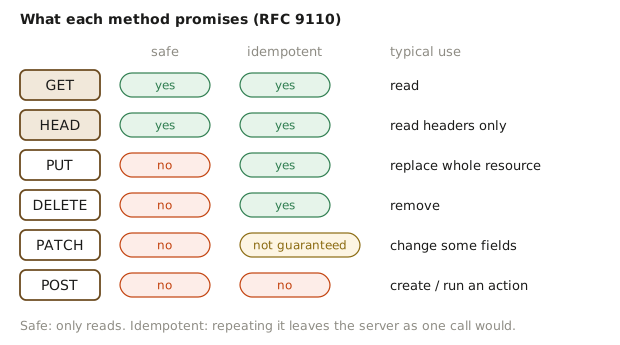
HTTP methods carry promises defined in the HTTP standard (RFC 9110). A method is safe if it only reads: GET and HEAD are safe, so crawlers, caches and prefetchers may call them freely. A method is idempotent if sending the same request twice has the same effect on the server as sending it once: GET, HEAD, PUT and DELETE are idempotent. POST is neither: two identical POSTs to /orders create two orders.
PUT replaces the whole resource with the body you send, so repeating it changes nothing further. PATCH changes part of a resource; it isn't guaranteed to be idempotent ('add 1 to quantity' isn't), though many PATCH requests ('set status to paid') happen to be.
A mobile app loses its connection after sending PUT /profile and retries: nothing breaks, the profile ends up the same. If it retries POST /payments the same way, the customer may be charged twice, which is why payments need the idempotency keys from a later lesson.
Which methods are idempotent according to the HTTP standard? (Choose three.)
Select 3, then check.